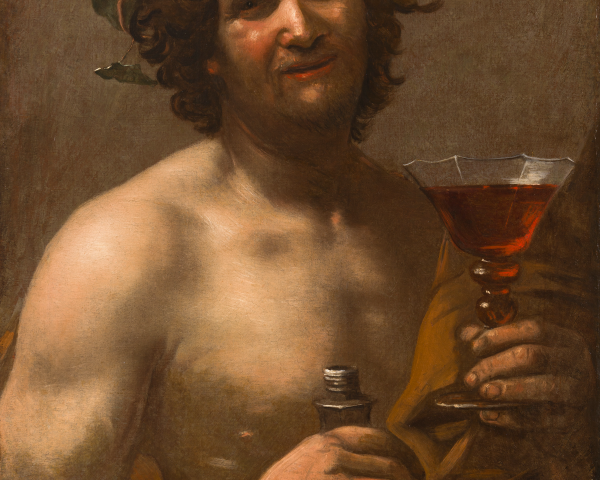
In Vino Veritas: The Visual Rhetoric of Wine foregrounds wine as a primary motif in the Western iconographic tradition. By juxtaposing archaeological material with Old Master paintings and sculptures, we trace a fundamental shift in European attitudes toward wine and its representation: from wine as a communal, ritualised tool to wine as a site of private, allegorical reflection.
The narrative opens with the material culture of the symposium. Here, Greek vessels such as the krater, kylix, and amphora are regarded as liturgical instruments and sophisticated carriers of meaning. This ritualised performance transitions during the Renaissance and Baroque into a Dionysian revival, tracing the metamorphosis of Bacchus from classical deity to a vehicle for exploring the "liminal" - the precarious line between civilised leisure and feral excess. Parodi's sculpture of Bacchus is presented alongside Van Dalen's painted Bacchus and Goya's Sacrifice to Priapus. Together, these works evoke the tradition of paragone, the longstanding dialogue between painting and sculpture.
The final section examines the development of the still life. In the Dutch banketje, Spanish bodegón, and Italian natura morta, wine is deconstructed into its constituent elements: the crystalline transparency of a Roemer, the bruised bloom of a vine, the smooth surface of the grapes. From the tonal restraint of Van Son to the warmer naturalism of Meléndez, these works carry a heavy symbolic subtext, functioning as ontological meditations on Vanitas, light, and the transience of the senses.
In bridging the material presence of the ancient vessel with the elegant artifice of Baroque and Neoclassical masterpieces, the exhibition aims to reclaim wine as a cornerstone of European visual rhetoric.